

If you’re growing your own hydroponic crops, then you’re certainly on the right track. Growing your own crops at home lets you control exactly what you put into them, and therefore what you put into your body. Although hydroponics systems use up to 90 percent less water than soil-based growth, the humidity in your hydroponic grow room is still very important to control. That’s why you likely need a hydroponic dehumidifier for your grow room. Today’s guide will provide you with all of the information you need to choose the best hydroponic dehumidifiers.

Why Do You Need a Hydroponic Dehumidifier?
Before we figure out what the main factors to look out for are when choosing from all of the different hydroponic humidifiers, let’s first figure out why you need one in the first place.
Disease Control
One of the main reasons why having hydroponic dehumidifiers in your hydroponic grow room is so important is because it helps prevent diseases. There are many diseases that thrive in humid conditions, with mildew and mold being two of the most dangerous ones.
Technically speaking, mildew and mold are types of fungi, and they spread very quickly, causing great damage to your crops. At the same time, there are also many other types of mold that can destroy your plants, and they all love high humidity levels. There are many plants that grow well in hydroponic conditions, but they’re all susceptible to these same issues.
Preventing Pests
There are also various pests, with whiteflies, aphids, and spider mites being three of the most common ones, which absolutely love extremely moist environments. These are pests that can cause great damage to all of your plants and crops by feeding on the foliage, the sap, and by spreading diseases. Keeping humidity levels in control by using hydroponic dehumidifiers can help keep these pests at bay, something that’s crucial when you’re trying to grow those delicious hydroponic blueberries.
Providing a Stable Growth Environment
The other reason why it’s so important to have a dehumidifier in your hydroponic grow room is because different plants require different humidity levels. Furthermore, different plants also require different humidity levels at various stages of their growth cycles.
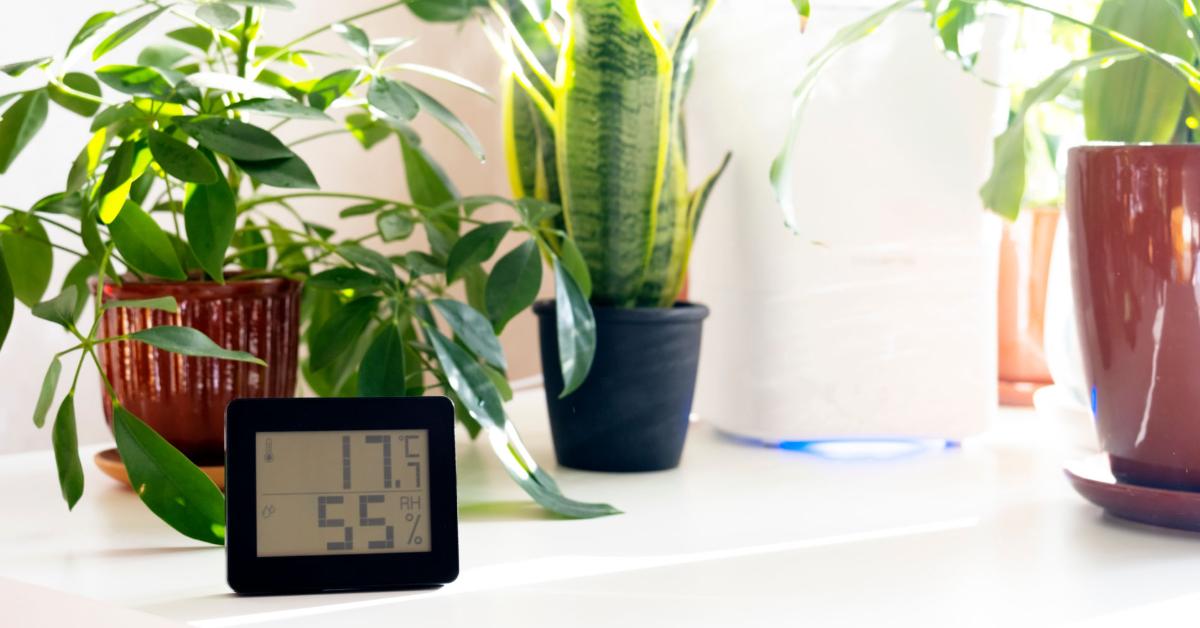
For instance, younger plants and seedlings often require higher humidity levels, up to 70%, while more mature plants usually require humidity levels no higher than 50%.
Having a choice of various hydroponic dehumidifiers allows you to choose the best one to keep those humidity levels in check and to provide your plants with the best growth conditions. If you’re not sure about a full-scale hydroponic setup, check out this neat guide on how to make a hydroponic garden in a water bottle.
Factors to Consider When Choosing a Dehumidifier for Your Grow Room
Before we take a look at some of the most popular and useful hydroponic dehumidifiers that the market has to offer, let’s take a look at the main factors you need to consider before making a choice.
Capacity in Pints
When choosing from all of the hydroponic dehumidifiers out there, one of the main factors to keep in mind is the capacity, which is usually measured in pints. This is an indication of how much moisture or water the humidifier in question can remove from the air in a 24-hour period. Small grow rooms will benefit from dehumidifiers that can handle up to 30 pints per day, with larger grow rooms requiring 60 or more pints per day.
CFM – The Airflow
The next consideration to make when choosing from the many hydroponic dehumidifiers is CFM, which stands for cubic feet per minute. This tells you how much air the dehumidifier in question can move per minute. The higher the CFM of the dehumidifier in question, the more it will be able to dehumidify in any given amount of time. A small grow room should do fine with a unit that can produce up to 200 CFM, with very large grow rooms requiring hydroponic dehumidifiers with 500 CFM or more.
Energy Efficiency
Hydroponic dehumidifiers will likely have to run for a good deal of time on a daily basis, and that’s going to cost you money in terms of your energy bill. Therefore, you should look for a dehumidifier that is Energy Star rated, and this will not consume much electricity, while still performing as it should.
Drainage
You then want to look for hydroponic dehumidifiers that features continuous drainage. A continuous drainage system means that you can hook up a hose, which can then lead to a drain in your floor.
There are dehumidifiers where you have to manually empty the water tank, which can be beneficial in some cases, but generally a nuisance. If you have to empty your dehumidifier more than once per day, it’s going to get quite annoying.
Settings and Controls
Next, you want to look for hydroponic dehumidifiers that features a variety of settings and controls. The unit in question should at the very least have a humidistat and an adjustable humidity setting. This will allow you to accurately maintain the proper humidity levels in your grow room.
Noise
Although hydroponic dehumidifiers are very useful, they can also be very loud. Although it’s not the worst thing in the world, having a super noisy dehumidifier can also be quite annoying. If you can find a unit with less than 50 decibels of noise, then you’re definitely on the right track.
Overall Quality
Next, you just want to look for a hydroponic humidifier that features a great build quality. This means finding a unit that is made out of durable and solid materials, as well as one that has great reviews in terms of longevity.
Although we usually always recommend sticking to a budget, you do get what you pay for, and this is certainly the case with dehumidifiers. We recommend investing a little bit extra into a high quality unit.
Filters and Maintenance Requirements
Many dehumidifiers come with filters, with many being reusable and washable. If you want to be as environmentally friendly and eco conscious as possible, going for a model that features reusable filters is essential. Also pay attention to how easy those filters are to remove and to clean.
Warranty
Although this will differ from 1 brand to another, and from one model to the next, you should look for a dehumidifier that features decent warranty. At the very least, look for hydroponic dehumidifiers that feature a one year warranty.
The 4 Best Hydroponics Dehumidifiers: Reviews
Now that we know exactly what to look out for when choosing hydroponic dehumidifiers, let’s take a closer look at four of the most popular models out there and what they can do for you.

AirGrean Dehumidifier, 50-80 Pint
The 50 to 80 pint AirGrean Dehumidifier is a suitable model for those that require a unit for medium and large hydroponic grow rooms. As the name implies, it is able to remove up to 80 pints of moisture from the air every single day.
This new humidifier comes with multiple fan speed settings so you can adjust the speed as needed, along with a humidistat for precise humidity control. It is quite the energy efficient unit, as it operates at 545 watts, and features an Energy Star rating.
As far as hydroponic dehumidifiers go, this one is also a prime option as it features a built-in pump that allows for continuous drainage, along with a drain hose.
Weighing just over 44 lbs and coming in at 15.43 x 11.10 x 24.25 inches, also makes it quite portable and compact. Although it’s ideal for large grow rooms, it doesn’t take up that much space.
On that note, although it might not be the largest unit in the world, it’s made with very high quality materials that they’re able to resist humid environments. You’ll also like that there is a removable and washable filter included.
Quest Dual 155 Overhead Dehumidifier
If you are looking at large hydroponic humidifiers that are able to remove great amounts of moisture from the air per day, then the Quest Dual 155 Overhead Dehumidifier is one worth looking into.
What of course stands out about it is that it’s designed to be placed overhead, therefore saving space in your grow room. However, it can also be used at ground level. Its compact design helps ensure that it doesn’t take up much space either way.
We said that this is a high-capacity unit, and that’s true, because they can remove up to 155 pints of moisture from the air every single day. This particular unit is rated at 7.3 pints per kWh, which can be considered very efficient. An added bonus is that it also features quiet operation.
In terms of drainage, it features a condensate pump, along with optional ducting kits and a built-in pump which allows for continuous drainage. Overall, this model features an insulated cabinet that allows for both noise reduction and increased durability. The fact that it is made in the USA is just an added bonus.
This dehumidifier, although quite expensive, is built to last for a long time. What’s very impressive is that it comes equipped with MERV-11 filters that are able to capture particles as small as one Micron, and that includes mold spores. If you’re looking for a high capacity and powerful unit, this is it.
AirGrean Portable Dehumidifier
Here we have the AirGrean Portable Dehumidifier, which is available in two models, the AG-D110 and the AG-D210, which are able to remove up to 110 or 210 pints per day, respectively. The former is suitable for medium grow rooms, with the latter being suitable for the largest of grow rooms. The heavy-duty compressor and overall durable design certainly makes it worth the high cost.
One of the standout features here is the intelligent dynamic LCD display that allows you to choose from multiple fans speeds, view the current humidity level, and choose the desired humidity level. What you may also appreciate is that both models feature energy efficient designs, with the smaller unit operating at 887 watts and the larger operating at 1030 watts.
To ensure ease of use, this unit features an internal condensate pump that allows for continuous drainage. This is known as a portable unit, which is thanks to the large and durable wheels, as well as handles that make it easy to pull.
That said, the larger of the two units is quite sizeable, coming in at 110 lbs, with dimensions of 20.5 x 21.3 x 36.6 inches. This dehumidifier also comes with washable and removable filters for greater eco-friendliness.
Ideal-Air™ Dehumidifier 60 Pint – Up to 120 Pints
The Ideal-Air™ Dehumidifier is a great option to consider if you need something that is able to remove up to 120 pints of moisture from the air per day. It’s suitable for grow rooms that have very high humidity levels.
One of the standout features is the intelligent humidistat that allows you to precisely control the humidity level in your hydroponic grow room. As far as hydroponic dehumidifiers that come in at a reasonable price go, this appears to be one of the very best. The digital display is very easy to use, and it also allows you to choose from a variety of fan speeds.
Thanks to the fact that it only consumes 780 watts of energy, it is quite the efficient model, not to mention that it’s fairly quiet. The fact that it comes complete with an internal condensate pump that allows for continuous drainage is quite convenient as well. It also comes with an integrated drain hose for even easier use.
As far as reasonably priced hydroponic dehumidifiers are concerned, this is also a top option as far as durability is concerned. It’s made with a variety of materials that are designed to resist moist and corrosive grow room environments. With a removable and washable filter system, maintenance is also made easy.


